After a couple of gentle reminders to the diesel specialists, I got my injectors back all shiny and with all new nozzles. Sooooooooooooooo...........just pop them in and we're good to go!
No such luck. Smoke was worse than before. No photos, I had to evacuate the barn or suffocate.
Time for a think. The smoke was whiteish and stinking of unburnt diesel. Not much under load, but lots on light load and on the overrun.
This cannot be lack of compression, or due to burning oil, or bad injectors. The only thing I haven't done is the injector pump, and I had refitted the pump taking the timing as read.
In my somewhat limited experience, white smoke has often been due to timing errors. Too retarded, and the cylinder charge is expanding and cooling off by the time the burn gets going, so there is a lot of unburnt fuel. I suspected the timing was too retarded. I thought I would try advancing the timing by rotating the pump.
Here's the new setting.

It's not a huge difference, probably about 3 crank degrees but I thought I'd give it a go anyway to see if it made any difference.
It did. About half as much smoke as before. That meant that the timing setting of the pump was probably wrong, so it would be good to check that before making any more blind adjustments. Oh how I wish I had checked that when assembling the engine, and not trusted the marks!
Perkins have a handy little peg which engages in a couple of hole in the crank pulley. One is for TDC and the other is at the static injection point (18deg?) before TDC.
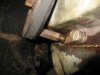
With the engine locked exactly at the injection point. The fuel filter has to come off, and this cover can be removed.
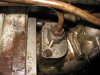
With the cover off, suck out the fuel...........................
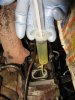
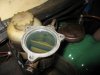
....................and there are the marks.
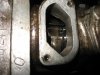
You can see that even with the timing advanced a bit, the rotor still hasn't come around to the setting which is the end of the circlip just to the right. (The line just above the A is the mark, and it's moving downwards) So the timing had indeed been way out, and evn more advance was required.
Here's how bad the access to the bolt round the back is!
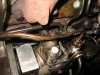
That's a 1/4 drive ratchet with long extension, 7/32 socket and a cut-off 7/32 allen key. And even when it's on the bolt it's a right b***ard to turn, one miserable click at a time. I've made a temporary cover for the hatch to keep out any stray dirt.
Anyway, the pump was duly slackened, and here's the new setting.
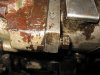
It doesn't seem a lot, but in diesel timing terms, that's a big adjustment. But now the timing is correct according to the pump rotor, with just a smidge of extra advance to cover any wear that might have taken place in the pump.
When putting the hatch cover back on, I discovered that the wrong screws had previously been used, and there was only two threads holding it onto an aluminium casting. Just as well I did this little exercise I think!
Fortunately I found the correct screws on my spare truck engine with the CAV pump, so I used those.
The correct screws had holes for wire seals, so that was conclusive evidence that the last person messing around with the pump was not a diesel specialist.
Fuel filter back on, quick bleed of the pump. Start the engine, and hey presto, the smoke was gone. Just the kind of stuff you'd expect from an engine designed before smoke regulations came in.
But now another problem .
.
Continued in another post............................
No such luck. Smoke was worse than before. No photos, I had to evacuate the barn or suffocate.
Time for a think. The smoke was whiteish and stinking of unburnt diesel. Not much under load, but lots on light load and on the overrun.
This cannot be lack of compression, or due to burning oil, or bad injectors. The only thing I haven't done is the injector pump, and I had refitted the pump taking the timing as read.
In my somewhat limited experience, white smoke has often been due to timing errors. Too retarded, and the cylinder charge is expanding and cooling off by the time the burn gets going, so there is a lot of unburnt fuel. I suspected the timing was too retarded. I thought I would try advancing the timing by rotating the pump.
Here's the new setting.
It's not a huge difference, probably about 3 crank degrees but I thought I'd give it a go anyway to see if it made any difference.
It did. About half as much smoke as before. That meant that the timing setting of the pump was probably wrong, so it would be good to check that before making any more blind adjustments. Oh how I wish I had checked that when assembling the engine, and not trusted the marks!
Perkins have a handy little peg which engages in a couple of hole in the crank pulley. One is for TDC and the other is at the static injection point (18deg?) before TDC.
With the engine locked exactly at the injection point. The fuel filter has to come off, and this cover can be removed.
With the cover off, suck out the fuel...........................
....................and there are the marks.
You can see that even with the timing advanced a bit, the rotor still hasn't come around to the setting which is the end of the circlip just to the right. (The line just above the A is the mark, and it's moving downwards) So the timing had indeed been way out, and evn more advance was required.
Here's how bad the access to the bolt round the back is!
That's a 1/4 drive ratchet with long extension, 7/32 socket and a cut-off 7/32 allen key. And even when it's on the bolt it's a right b***ard to turn, one miserable click at a time. I've made a temporary cover for the hatch to keep out any stray dirt.
Anyway, the pump was duly slackened, and here's the new setting.
It doesn't seem a lot, but in diesel timing terms, that's a big adjustment. But now the timing is correct according to the pump rotor, with just a smidge of extra advance to cover any wear that might have taken place in the pump.
When putting the hatch cover back on, I discovered that the wrong screws had previously been used, and there was only two threads holding it onto an aluminium casting. Just as well I did this little exercise I think!
Fortunately I found the correct screws on my spare truck engine with the CAV pump, so I used those.
The correct screws had holes for wire seals, so that was conclusive evidence that the last person messing around with the pump was not a diesel specialist.
Fuel filter back on, quick bleed of the pump. Start the engine, and hey presto, the smoke was gone. Just the kind of stuff you'd expect from an engine designed before smoke regulations came in.
But now another problem
.Continued in another post............................