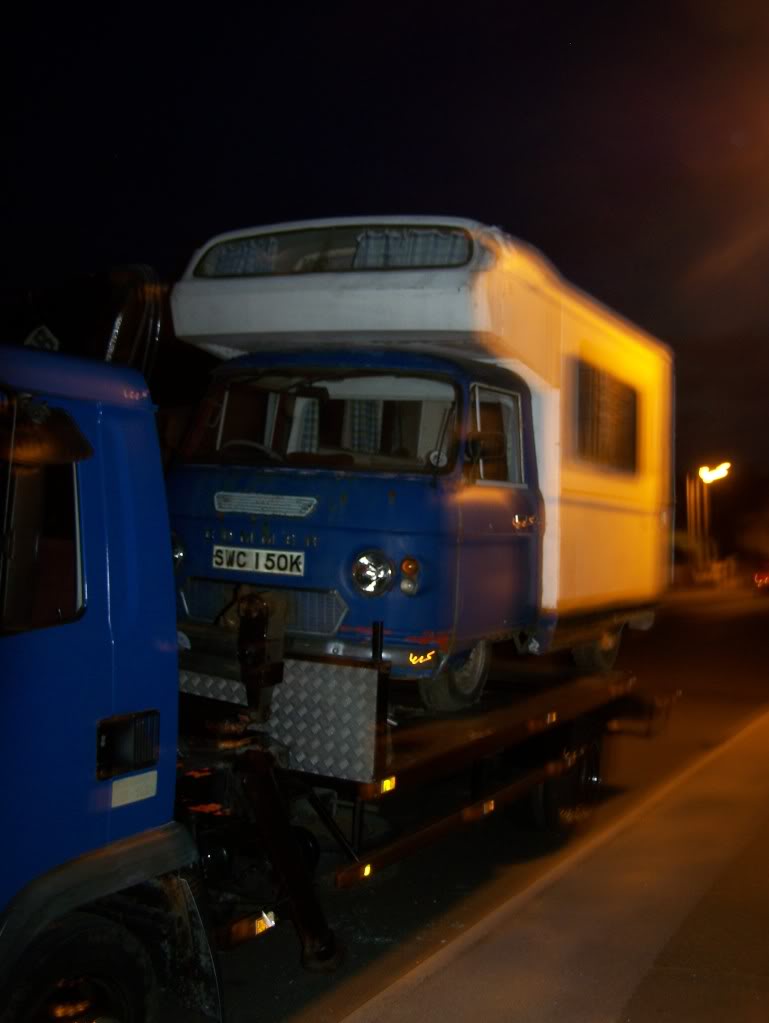
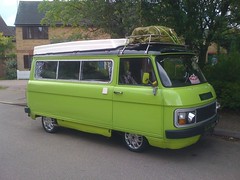
Righto - There are people who think that lowering a car is dangerous and will give you cancer. There are others out there who think that having cancer is more appealing than driving an old car at stock ride height. Like all things, the truth is somewhere in the middle. I can tell you from experience that a safely and correctly lowered old vehicle will drive better and be safer than a stock ride height one.
The Commer van is a big wide box with really soft suspension that sits way up in the air on a wheel track almost half the width of the vehicle. Its a recipe for poor handling. If the centre of gravity can be lowered, the body roll will improve (proven a million times in motor racing). When monkeys mess around with old suspension systems that don't work too well to start with, they give lowered vehicles a bad name. The key is to make modifications to the suspension safely.
1) Cutting coil springs is bad. a) By removing coils, cutting stiffens them up as there is less spring material to do the springing (there is ample coil spring theory on the net - use google if interested). b) From what I understand, cutting off the flat portion of the spring where it seats against the suspension puts stress on the springs where it shouldn't be. c) If cut too much coil springs can fall out when the car goes over a bump, but the Commer springs are captive so that shouldn't be so much of a problem.
If you want to maintain the lowered look, the solution is either to have stock springs re-compressed, or have new springs manufactured (I was quoted $NZ90 to have a pair of springs re-compressed, so it's quite reasonable and there is no excuse not to do it).
More popular car makes (like VVW's) have a huge aftermarket where it is possible to buy things called dropped spindles. Dropped spindles are great - they lower the centre of gravity while retaining the stock suspension travel. All they do is change the position where the front wheels bolt to the suspension (consequently, off-road guys can buy raised spindles for more ground clearance). Unfortunately we don't have that option with Commer vans, so people cut springs....
2) Removing leaves from the rear springs is bad. In a Commer, removing leaves will make an already soft suspension softer. Unlike coil springs, leaf springs get softer when material is removed. The easiest solution to keep the lowered look is to have new springs manufactured, or have original leaf springs re-set to the desired height. If you want to blow heaps of money, you can fit a 5 link system like in that green V8 montser....
3) The other option at the rear is to "flip the diff", or to put the axle on top of the rear springs, instead of underneath. If the springs aren't re-set to compensate, flipping the diff will give something like an eight inch drop, and leave the van sitting on the bump stops. Here in NZ we wouldn't get away with having such little suspension travel, the van wouldn't get a WOF, and would probably be put off the road for illegal and unsafe modifications.
I don't know if your van has had the diff flipped, or leaves removed from the springs. Either way its not good.
4) If the shock absorbers are shot, there will be nothing to dampen the side to side motion you talk about, and the vehicle will get the sways. Scary stuff. On a stock height front end, new, modern, gas filled shocks will firm up the soft boat-like suspension and help make sure you come out of corners the right way up. The front shocks are easy to replace (Toyota mod listed earlier on this thread) but the back of a Commer has those stupid lever activated jobs. They need to be binned and modern shocks fitted, but that's getting into a lot of engineering work, so you might just have to stick with them.
5) The tracking, or wheel alignment, of the vehicle will make a massive difference to the way the van reacts to ruts and bumps in the road. I think it was Panky (?) who said earlier that toe-out will leave you fighting for directional stability as each wheel alternatively tries to point straight ahead. To make the van drive in a straight line, the tracking will need to be set by a shop, but to do that (lowered or not) the whole suspension system has to be in good shape (bushes, ball joints, king/link pins, suspension joints, wheel bearings, etc etc).
6) A phenomenon called bump steer often happens on lowered cars, when the steering arms are at such an angle due to the lowering that they pull at the wheel as the car goes over a bump, making the vehicle swerve. But if you don't have any suspension travel at the front of your van, you are unlikely to be getting bump steer.
7) Some people put smaller tyres on their Commer vans to lower them. Smaller tyres work OK at the front, but on the back they will lower the overall gearing which will; reduce actual top speed; bugger up the speedo (the van will show a higher speed than what it is actually doing); increase noise; increase driveline wear; and increase fuel consumption. Smaller tyres on the rear need to be fitted with a taller diff ratio and/or an overdrive gearbox.
You could put everything back to factory settings, but then you would have a brick sitting 2 feet off the ground. Hello white knuckle driving. The point of all my rambling above was that you can have a lowered vehicle, but it must be lowered correctly to be safe. It doesn't sound like your van has been lowered safely, so it might be time to open your wallet and get the suspension sorted. I bet Mrs Hubbell won't want to hear that either.