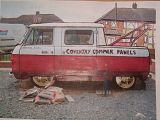
Not been on the forum for a while and just seen this sad news [:0]
I've not seen the whole thread but haven't seen whether you've been advised which category of 'total loss' your Commer has been categorised -
this is important here !
The following ombudsman link might be useful to refer to in any discussions ;
http://www.financial-ombudsman.org.uk/publications/technical_notes/motor-valuation.html#16
but it essentially states ;
quote:
16. salvage of the "written-off" vehicle and contents
Once the policyholder accepts payment of the full market value, the insurer becomes the owner of the salvage. If the policyholder asks to keep the salvage, the insurer is entitled to deduct what it would have been able to sell the salvage for. This is usually not very much.
But what if the policyholder complains that the insurer (or its agent) disposed of the salvage before paying the full market-value? At this stage, the vehicle still belongs to the policyholder, and we take the view that the insurer should not have disposed of it without first obtaining the policyholder’s consent to the settlement of the claim – even if the insurer said it was only acting in the public interest by keeping a badly-damaged vehicle off the roads. In such circumstances, and unless the insurer returns the salvage, we usually award the policyholder compensation for inconvenience.
If the policyholder had personal belongings in the vehicle when the insurer disposed of it without consent, we are likely to award the cost of replacing these – usually on a like-for-like (rather than a new-for-old) basis.
"Written-off" vehicles are categorised – according to the severity of the damage – under a voluntary code agreed between the Association of British Insurers (ABI) and salvage dealers (ABI Code of Practice for the Disposal of Motor Vehicle Salvage):
Category A vehicles are to be kept off the road and crushed.
Category B vehicles are also to be kept off the road, but could be broken up for spare parts.
Category C vehicles are repairable, but uneconomical to repair.
Category D vehicles are repairable economically, but written-off for some other reason.
Since 7 April 2003 all category A, B and C vehicles notified to DVLA must pass a Vehicle Identity Check before they can be returned to the road. This is an identity check, to confirm that the vehicle is the original one and not stolen, and does not check roadworthiness or repairs. (The Road Vehicles (Registration and Licensing) (Amendment) Regulations 2002)
My personal view is that quite often the day-to-day claims handlers, let's just say, aren't always the most helpful ! Basically their role essentially focuses on clearing workload rather than providing the best customer service.
Insurance companies as a whole being a business are looking to minimise their expenditure and keep things are simple as possible.
Essentially it is up to you (plus representatives directly acting on your behalf) to look after your best interests, to counter the interests of the claims handler/insurance co. etc
My first recommendation, if you've not already, is to escalate this case within the company to a senior claims manager or higher for a full review of your situation.
I suggest you document all conversions you have from here on in. The ombudsman will probably ask for this detail, should you go then go down that route.
If you're still not satisfied with any review outcome, I personally would instruct (formally in writing) your insurer's chief executive, copying in the case reviewer detailing the disatification and that it is now being be referred to the ombudman.
Then engage the ombudsman
Whilst there is no harm in understanding beforehand the ombudsman's procedures in advance and there various statements/policies relating to similar circumstances. Generally the ombudsman looks for reasonable escalation with the company first before they're engaged.
The ombudsman outline complaint procedure is here ;
http://www.financial-ombudsman.org.uk/consumer/complaints.htm
Another useful read might include the Association of British Insurer's "Code of Practice for the Disposal of Motor Vehicle Salvage".
http://www.abi.org.uk/Information/Codes_and_Guidance_Notes/40510.pdf
I've spent many years working for an insurance company in a variety of roles and would be very happy to provide any assistance to you on this. I must confess though I'm not a claims expert but have sought some basic advice from current contacts in that area for you here.
Best of luck !!!
'Hunny' our Commer Hi-Tor by TorCars

 of course it would be a shame to lose the number plate, all i was trying to say was that if it turned out to be a worse case senario and he got nothing fom the insurance company and needed to raise some money to finish off rebuilding the van he has the number plate to fall back on. and also i think the insurers should be made aware that the plate is worth some money before they cast their offer. anyway it was just a thought thats all.