Battery charging

BC Sunshine

Active Member
disclaimer: I am not, in any way, a mechanic.
Should have got one of those before investing in the camper, as I'm having some serious buyers remorse at the moment.

After just two outings, my lovely will not start.
Turns over weakly, but that's it.

I have purchased a battery charger, but the instructions are confusing; I don't know if the batteries I have are positively or negatively grounded, or which of the two batteries I should charge first (or does it matter).

Any suggestions?
 
You shouldn't have mentioned the starting handle;)
If you have two batteries then one will be the main starting battery and the other will be the leisure battery (for caravan lights, and maybe fridge) and will be connected with much lighter cables - the leisure battery is usually charged off the main battery through a relay which only takes power when the main one is fully charged and when the engine is running. The main battery will have big thick leads connected to it and the terminals will be marked on the battery casing with a + for positive and - for negative, check which one is connected to the vehicle bodywork and this will tell you if it's negative or positive ground. It's very unlikely that it will be positive ground so chances are it's negative.
Disconnect the battery terminals before you connect the charger, even better take the battery out completely and make sure you connect it back up the same way it came out.
Also make sure you haven't left anything switched on that will drain the battery.
If you could post some pics of the batteries it would help to confirm.
 
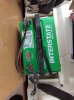
Contestant number one - behind the driver


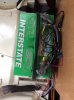
Contestant number two - passenger (which I'm guessing is the house battery, judging by all the extra wires.)

Nothing switched on - have been super careful about that since there's no warning indicators for a gal of this fine vintage. IMG_0851.JPGIMG_0852.JPG
 
Yep contestant two is the leisure(house) battery, apart from all the wires the 'Deep Cycle' written on it is a clue. It means it can be charged and discharger many times before it's knackered - whereas a normal battery can only be fully discharged a few of time before it fails. It's not suitable to be used as a main battery so don't be tempted to swap them over. Cant see where the cables go on the main battery but as said take it out, charge it and put it back in the same way it came out - the terminals are clearly marked so you shouldn't have too much trouble:)
Oh and disconnect the negative terminal first then there's no chance of having an accident with the live when you take that off - and when you put it back in connect the live first.
 
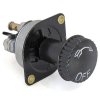
BC Sunshine. My van did similar. To note I ended up buying a new battery because mine was just too old, too weak. The other thing is that mine (and others) have a master on off switch off the battery. Mine certainly drains (off a radio and cigarette lighter) if I don't turn it off if off the road for a long time...
 

Attachments

  • battery_master_s_4c40bf3e0a745.jpg
    battery_master_s_4c40bf3e0a745.jpg
    60.8 KB · Views: 11
I'M ALIVE!!!!

Dear heaven, what a production.
After spending far too long just getting the bungee cord off the battery that was holding it very tightly in place, then a return trip to the shop where I bought the battery charger, because the manual said I must use an extension cable to attach to the negative post (shop guy rolled his eyes long and loud at that), rain, and fear of death after reading the charger manual, the battery is now actually charging.

I've read a lot of scary instruction manuals and handled some truly nasty, toxic substances in my day, but never have I ever read anything that threatened death by electrocution, being blown to bits along with my house then what's left consumed by fire, showered by acid then eaten alive, as often as the manual for this blessed trickle charger did. No word of a lie, it says to have someone standing by to render aid when you plug it in.

I need a nap after all the adrenalin.
 
Two crocodile clips and a mains plug - and wait for the bang:D
Sounds like they did a very thorough risk assessment and found even the most remote hazard that could possibly lead to litigation - but did the manual mention that you should wear kevlar reinforced gloves in case you break a nail taking the battery strap off;)
 
first drive after charging the main battery - started strong and promptly.

Need to invest in a tester of some kind I think - any recommendations? I don't have a dashboard gauge that tells me amps or an ammeter.
Still need to remove and charge the house battery.
 
It sounds like the battery isn't charging properly from the alternator. To test it you need a multi meter set to volts DC and check what it's reading across the main battery terminals. With engine off it should read 12 volts or slightly more, with the engine running it should read around 14 volts - then switch the headlights on and you should see a bit of a dip in voltage but it should recover quickly. As Chris said in your other thread check the fan belt and make sure it's tight enough or it will slip causing poor charging.
 
Back
Top