

It could be due to this fixing screw........
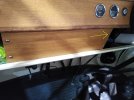
It's right over the instrument voltage regulator, which is mounted on the return panel behind. If the fascia fixing screw is a bit too long, it can go right into the voltage regulator casing like this.......
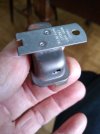
.........and destroy the internal workings like this........
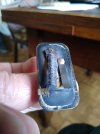
........resulting in the full 13.6 volts going to your temperature gauge, not the 10 volts it was designed for. That will cause it to read high by about 40%, that's enough to send it into the red.
Now I was going to just replace the regulator and move on, but then I looked at the "other" van in my workshop, and this is what I found.......
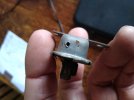
........exactly the same. The same panel fixing screw had been through the casing causing the same problem.
That's only a very small sample of 2 vans, but it's 2 out of 2, and the likelihood is that there are more vans with the same problem.
When I got our van (diesel), although it had a temperature gauge, it didn't have a temperature sender at all, so I installed one, and on driving, the gauge went into the red and I thought it was overheating. It wasn't, (I could put my hand on the engine) so I assumed the sender I'd bought wasn't quite compatible with the gauge and added a resistor to make it read right. The real reason is now obvious. The instrument voltage regulator was knackered.
Testing the regulator with a voltmeter isn't straightforward. It's a primitive thermal bimetal device which gives the instruments battery volts for a proportion of the time, and 0 volts the rest of the time. As the gauges react slowly, the more time they're on 13.6 volts the higher they will read. So if you're using a meter to test, the output should swap between 13.6 or so, and 0 volts continuously every few seconds. If you get battery volts all the time, it's knackered and your temp. gauge will apparently work OK but read high at normal operating temp. Same with the fuel gauge. It will read high.
So............Look at your little regulator. If it's got a little hole in the end like the photos, chances are it's knackered. Just as well to relocate it anyway, away from that fascia fixing screw. Of course it might be knackered even if it doesn't have a little hole in the end.
Every day's a school day . Even coronation day.
It's right over the instrument voltage regulator, which is mounted on the return panel behind. If the fascia fixing screw is a bit too long, it can go right into the voltage regulator casing like this.......
.........and destroy the internal workings like this........
........resulting in the full 13.6 volts going to your temperature gauge, not the 10 volts it was designed for. That will cause it to read high by about 40%, that's enough to send it into the red.
Now I was going to just replace the regulator and move on, but then I looked at the "other" van in my workshop, and this is what I found.......
........exactly the same. The same panel fixing screw had been through the casing causing the same problem.
That's only a very small sample of 2 vans, but it's 2 out of 2, and the likelihood is that there are more vans with the same problem.
When I got our van (diesel), although it had a temperature gauge, it didn't have a temperature sender at all, so I installed one, and on driving, the gauge went into the red and I thought it was overheating. It wasn't, (I could put my hand on the engine) so I assumed the sender I'd bought wasn't quite compatible with the gauge and added a resistor to make it read right. The real reason is now obvious. The instrument voltage regulator was knackered.
Testing the regulator with a voltmeter isn't straightforward. It's a primitive thermal bimetal device which gives the instruments battery volts for a proportion of the time, and 0 volts the rest of the time. As the gauges react slowly, the more time they're on 13.6 volts the higher they will read. So if you're using a meter to test, the output should swap between 13.6 or so, and 0 volts continuously every few seconds. If you get battery volts all the time, it's knackered and your temp. gauge will apparently work OK but read high at normal operating temp. Same with the fuel gauge. It will read high.
So............Look at your little regulator. If it's got a little hole in the end like the photos, chances are it's knackered. Just as well to relocate it anyway, away from that fascia fixing screw. Of course it might be knackered even if it doesn't have a little hole in the end.
Every day's a school day
. Even coronation day.
