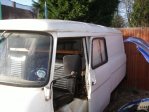
Rewiring my commer

Hello All,

After trying to figure out which wire goes where and why my indicators work sometimes and the fire we had last year 200 yards (old money, commers done work in metres!) from the camp site, I have decided to rewire my van.

Has anyone got any tips, where I should get the wire from, just anything that will make this job a good one.

Cheers

Dave
 
I've done a few cars.

I generally start by doing the ignition circuit (don't fuse) I then set up two fuse banks - one that is permanently live and the other that is only live when the ignition is live. Then quite methodically I do one circuit at a time eg main lights, indicators, brake lights, horn, stereo etc.

Use the wiring diagram in the manual for reference but don't get too tied to it - it has been carefully designed to use the absolute minimum wire, fuses etc. You can make something much better and robust yourself. There are various automotive wiring products companies out there but ebay can be cheaper. It's useful to have a scrap modern car to rob relays and flasher units off because these can be expensive.

Top tips...

Use a relay for the rad fan (if you have one) and overdrive. Personally I've use 0.75 - 1 mm2 wire (that's the sum of the cross sections of the wire strands added up within the wire rather than the width of the wire) for most stuff, but thicker stuff for the headlights and charging circuit.

Buy an electronic voltage regulator (ebay) rather than the electromecanical orginal ones - and use this for the fuel & temperature gauge feeds.

Buy a decent set of wire strippers, crimpers and cutter. Buy lots and lots of crimps (say 100 male bullets, 100 female bullets and 100 female lucars - blue unless you're using thin wire then buy red)

If you PM me I know a scrap cable dealer near Ledbury who will let you take some cable at just above scrap value. You'll have to rummage around his yard and pull out the bits you want - and pay cash!

It takes a surprising amount of time to do - 3 full days if you know (roughly) what you are doing and are going for a custom / proper job.

I've got a leisure feeding the non ignition linked fuse box with a voltage sensing relay connecting to the ignition/charging circuit. this way when the engine is off the stereo an internal lights work off the leisure battery. Have a look under readers rides - the snail.

m_5ab8dd55b2c2c84c5ce92d6090469c78.jpg
 
If possible always solder connections rather than crimping them ;)

4650583641_dba2503b41_o.jpg

"You,re only supposed to blow the bloody SLIDING doors off"
 
I am in the process of re-wiring babs, and can only confirm what has been said above. Crimped connections are ok, as long as they have been crimped with a proper tool and are of the uninsulated type (not the ones with red, blue or yellow plastic covers).

I use 1mm thin wall cable, which you can buy from various places. I use Polevolt, and vehicles wiring products - where you can purchase by the meter. Although the cables are thinner, they take a much higher load than the original cable. I use relays for dipped and main beam, but wire them individually with the 1mm2 wire - an idividual wire from the relay to each headlamp rather than the design of the loom as fitted. (the 1mm2 wire is rated at 17 amps, which is more than any available headlight on the market.

I have also fitted an 8 point fuse box - with 1 for the live battery circuit feed (which are the purple wires for the interior lights, horn etc, cig lighter for satnav, 3 for the lights (side, dipped and main) and the remaining four for the ignition switched circuits (green wires - wipers, heater fan, flasher circuit, radio etc.

Also agree with getting a solid state voltage stabiliser - and also fit an electronic flasher if possible.

My tip is to take out the existing loom, lay it on a large sheet of ply etc, mark out the design and then use that as the basis of the loom. As stated above - the original looms are designed to use the least wire possible - so I would do as sam says - and start with the individual circuits and use the diagram as a guide.

I also always add a mutliconnector on the loom branch that goes into the dash - so that I can remove the dash easily without having to disconnect all the instuments. If you are using relays for the high current circuits - you can get away with smaller type connectors. This isn't essential - but make life easier.

Cheers

Andy
 
Back
Top