
Hi there, Had the van back on the road for a year after a 22 year layup.It's running reasonably well but the temp gauge stays near the red, also any thoughts on hot starting, have rerouted and insulated the fuel line, had the manifold ceramic coated to cut underbonnet temperature, fitted a heat shield, electric fan and expansion tank, even added an extra air scoop below the original (this one goes right back to the rad. All the above have helped but not cured, filled up with BP super unleaded (no Ethanol) last time will see if this helps

You are using an out of date browser. It may not display this or other websites correctly.
You should upgrade or use an alternative browser.
You should upgrade or use an alternative browser.
Hot running
- Thread starter Malcolmmer
- Start date

Hi Mal and welcome to the Madhouse
By the sound of it you've done just about everything we recommend to cure hot starting problems, the only other one I can suggest is to fit an electric fuel pump and rout the fuel line from the tank under the van to the carb side of the engine bay. But 22 years is a long time and silt may have hardened in the block causing poor circulation, and if the rad has sat there for as long it may well have furred up:I Is the gauge definitely telling the truth, I got an infra red temperature Indicator for a tenner of ebay and you can point it at anything to tell you the true temp - very useful
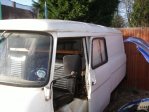
Any chance of pics of your van

Founder of the Non-Facebook Club
By the sound of it you've done just about everything we recommend to cure hot starting problems, the only other one I can suggest is to fit an electric fuel pump and rout the fuel line from the tank under the van to the carb side of the engine bay. But 22 years is a long time and silt may have hardened in the block causing poor circulation, and if the rad has sat there for as long it may well have furred up:I Is the gauge definitely telling the truth, I got an infra red temperature Indicator for a tenner of ebay and you can point it at anything to tell you the true temp - very useful
Any chance of pics of your van
Founder of the Non-Facebook Club

Well done after 22 years[8D]
Thankfully my Commer has no hot start problems, but then a previous owner was inspired to fit a Ford carb...
Also fitted was a Ford thermostat cover with a bigger outlet than standard, possibly with the intention of improving coolant flow.

The simpler the better...
Thankfully my Commer has no hot start problems, but then a previous owner was inspired to fit a Ford carb...
Also fitted was a Ford thermostat cover with a bigger outlet than standard, possibly with the intention of improving coolant flow.
The simpler the better...
Thanks for the feed back. The rad was recored and the engine had two doses of cooling system cleaner, water came out clear after half a dozen flushes. Water passages could still be furred up though. I have wondered if a thicker rad or even one made of a different material might help to provide better cooling. Have temporarily fitted a new gauge,sender, voltage stabiliser to check gauge and this seems to read the same. Not sure if the electric fan in front of the rad is restricting air flow so might remove this to see what happens.

A pusher fan is about 50% less efficient than a puller, so that may be your problem.
Hot starting problems are usually fuel vapourisation related. It helps alot to separate the manifolds as the inlet gets way too hot
"You,re only supposed to blow the bloody SLIDING doors off"
Founder of the 6 speed club
Hot starting problems are usually fuel vapourisation related. It helps alot to separate the manifolds as the inlet gets way too hot
"You,re only supposed to blow the bloody SLIDING doors off"
Founder of the 6 speed club

We had hot starting problems on hot days and one time when daytime temps hit 40+C it was impossible to start up without pouring fuel directly into the carby throat.
We fitted an electric fuel pump like Panky has suggested and also insulated the fuel line in the engine bay area and this fixed the problem immediately.
My fuel pump is very noisy when dry, so all you have to do is switch on and wait for it to go quiet before pressing the starter. usually takes about 5 seconds even on hottest days.
Ooh, unless you have a new fuel tank fitted always avoid Ethanol or it will eat the liner out of your tank and give you the dreaded snake skin.

Rain, hail or shine a Commer adventure awaits,,
Mount up!.
www.commervanoztour.blogspot.com
We fitted an electric fuel pump like Panky has suggested and also insulated the fuel line in the engine bay area and this fixed the problem immediately.
My fuel pump is very noisy when dry, so all you have to do is switch on and wait for it to go quiet before pressing the starter. usually takes about 5 seconds even on hottest days.
Ooh, unless you have a new fuel tank fitted always avoid Ethanol or it will eat the liner out of your tank and give you the dreaded snake skin
.
Rain, hail or shine a Commer adventure awaits,,
Mount up!.
www.commervanoztour.blogspot.com

I agree, the hot temperatures here in Australia can be a problem. I'm a great believer in having a fuel regulator with return line to the tank located in the engine bay. Even more important if you are spending time sitting still in summer traffic. A hot engine bay plus the added heat off the road under the vehicle puts a lot of heat into the fuel. The return line keeps the fuel moving in the lines and helps keep its temperature down as it returns and dissipates that heat into the larger volume of fuel in the tank. It was a big problem with Fuel Injected Triumphs here. The MK1 2.5PI was worst as it had no return line, the Mk2 did and was noticeably better, I've had both, but they still had problems as in both cases the fuel pump was located in en enclosed section of the spare wheel well with the muffler located underneath. Not one of their better engineering moments. Heat Heat and more Heat,then splutter, vapour lock! . Also if going to electric fuel pump, locate it closer to the tank as they can pump as far as you want, but have limited suction ability.
Cheers Stephen
Cheers Stephen
I did wonder about the fan in front restricting air flow, have had another look and there doesn't seem enough room to put it between rad and engine especially with mechanical fan still in place, am I missing something or have I got my push and pull wrong. Have had a word with a rad man and he wonders whether when the rad was recored they put in the wrong one, mine seems very fine does this increase or decrease the cooling. Have learnt a lot since putting the van back on the road but I'm no mechanic as you can tell. All your advice is much appreciated
Generally the more surface area to have the more cooling effect you will get but if the fins are too fine the air flow through them could be restricted and having the fan in front could make thins even worse.
I moved the rad forward about four of inches to get my leccy fan in, but I had to re-position the throttle cable bracket and modify engine lid to accept the new position of the radiator cap. Saying that my fan is a big chunky one off an Escort turbo diesel, the modern slim ones mightn't need as much space.
I'm still going for the restricted waterways as your problem, I had a similar problem with my vans original engine - even after an engine re-build and a new core for the rad it would still overheat[xx(] Now that same rad is cooling a Rapier engine with no mechanical fan and the leccy one only cuts in under heavy load (big hills) or town traffic As an experiment I'd remove your pusher leccy fan and see what happens, if still no good maybe investigate some other form of engine flushing:I
Founder of the Non-Facebook Club
I moved the rad forward about four of inches to get my leccy fan in, but I had to re-position the throttle cable bracket and modify engine lid to accept the new position of the radiator cap. Saying that my fan is a big chunky one off an Escort turbo diesel, the modern slim ones mightn't need as much space.
I'm still going for the restricted waterways as your problem, I had a similar problem with my vans original engine - even after an engine re-build and a new core for the rad it would still overheat[xx(] Now that same rad is cooling a Rapier engine with no mechanical fan and the leccy one only cuts in under heavy load (big hills) or town traffic
As an experiment I'd remove your pusher leccy fan and see what happens, if still no good maybe investigate some other form of engine flushing:I
Founder of the Non-Facebook Club

My leccy fans are 28% less efficient as a pusher as the blades are reversible. The advantage of a pusher is it encourages more even temperatures (blocking some of the rad when not in use).
Some advice on fuel vapourisation here:
http://www.ratsport.com/PBCPPlayer.asp?ID=1472981
Cheers
Jules
RatSport: www.ratsport.co.uk
Twitter: https://twitter.com/RatSport
Some advice on fuel vapourisation here:
http://www.ratsport.com/PBCPPlayer.asp?ID=1472981
Cheers
Jules
RatSport: www.ratsport.co.uk
Twitter: https://twitter.com/RatSport
After a full resto of my highwayman i had terrible overheating problems. I had fitted an electric fan in place of the original. Did everything as it should be done, moved rad forward, recored, total block cleanout but it still went balistic after a few kms. Turned out that removing the fan shroud was big mistake. Cooling is borderline at best and without the shroud, no matter how much air went through, it just overheated. Ended up putting it back to standard and now its as good as gold. It just didnt work out for me but others have had success with it.
I just need a good rootes...
I just need a good rootes...
Hear what you say about electric fuel pump but what is the science behind it? why is it better. How do you separate the manifolds, I think mine has a plate between to direct gas flow, is this what you mean or to physically separate them which then surely they wouldn't line up with the head, (Am I missing something or am I just dim).When I made up the heat shield I did put an insulator block under the carb. It sounds like the SU carb is better than the Weber, which one fits and is it easier to fit, any mods needed? Thanks again for all the feed back, keep it coming it is appreciated.
The SU conversion means some serious alterations to the manifolds - top connection for the original carb is blanked off and a new stub/flange welded on for the SU. The manifolds are separated and the resulting hole in the exhaust one blanked off, this includes trimming back the castings to get a decent air gap between them. The results are quite amazing with better performance, fuel economy and a load more torque[^]
Tim (commeracer) is your man for the conversion.
In certain circumstances the leccy pump is better, it's normally mounted near the tank well away from the engine so won't get gas locked because of the heat. Saying that both my vans are running the mechanical pump with no problem so it maybe worth trying to solve the over-heating problem first.
SU Conversion
Founder of the Non-Facebook Club
Tim (commeracer) is your man for the conversion.
In certain circumstances the leccy pump is better, it's normally mounted near the tank well away from the engine so won't get gas locked because of the heat. Saying that both my vans are running the mechanical pump with no problem so it maybe worth trying to solve the over-heating problem first.
SU Conversion
Founder of the Non-Facebook Club