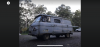
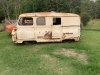
Continued..............
The range was upgraded again in September 1965. All were now available with a three speed Borg Warner automatic transmission and the engine was uprated to the newly announced 1725cc Rootes unit, producing 58 bhp. Diesel buyers also got a new engine – the 1752cc Perkins 4.108 . Externally, the new model could be recognised by a lozenge shaped grille which improved air flow for the larger engines. Proper indicators lamps were fitted below the sidelamps. The range was renamed the PA 1500/2500 series. However, the range had been reduced dramatically to vans, minibuses and chassis cabs. All other body styles now had to be ordered from specialist body builders.
In August 1967, the range was renamed the PB series. Not much else changed apart from the handbrake working on the front wheels and the dynamo being ditched in favour of an alternator. The range was also offered with a Dodge or Fargo badge in some markets, following the formal take over of Rootes by the American Chrysler company. The Dodge models were known as K 120, K 140 or K 160 depending on payload, the Fargos as F 120, F 140 or F 160.
The next major change came in January 1970, when the 18cwt option became a model – the 2000 – in its own right. By this time a heater was standard equipment.
More comfort for the driver…A new deluxe cab was introduced at the end of 1970 for the 1971 model year., responding to competition from the Ford Transit and Bedford CF both of which offered far nicer driver environments. The deluxe cab featured tan seat trims, padded dashboard, padded door trims, headlining and a cigarette lighter. The basic cab gained, like the deluxe, a new square shaped instrument and switch binnacle and a steering column lock.
In 1974, the range was renamed the Spacevan, capitalising on the 200 cubic foot of space offered by the van which was more than any of its competitors. The standard engine became a low compression detuned 50 bhp 1725 unit; the previous 58 bhp unit became an optional extra. Overdrive joined the options list however, although only available with the higher powered engine. By this time, the Commer was really beginning to look its age, especially up against the Bedford CF and Leyland’s new Sherpa. Commer’s only styling change was to enlarge the size of the rear light units!
Overseas models were sneaking into the market too, with much higher levels of driver comfort – including the forward control Toyota Hi-Ace.
In January 1976, Chrysler’s British operations were bailed out by the British government. Part of the investment deal was a commitment by Chrysler to uprate the Spacevan by 1977. The Spacevan was starting to fall behind the competition, a consequence of a lack of major product development. Truck magasine pitted a Spacevan against the Transit, CF, Sherpa and VW Transporter in early 1977 and noted that: “it’s hard to believe it can compete on equal terms with the later Transit, CF and Sherpa”. Having said that, they praised the Dodge for its brakes and added that although it looked unsafe on the twisty bits: “body roll is well restrained.” Truck did point out that while the Dodge may be behind the others on performance (top speed of 62 mph compared to 85 for the Sherpa), so too was it behind them on price!
In August 1976, the name Dodge was adopted across the board by all commercials sold by Chrysler in Britain. A temperature gauge was now standard on the Spacevan along with electric windscreen washers and two speed wipers.
A new face in space…In May 1977, a new light van assembly line was installed at the Dunstable plant and in October 1977 the new look Spacevan was unveiled.
The new Spacevan had a new plastic front grille, running the full width of the van. The front bumper was raised and had a gap in it to allow air to cool the engine. Mechanically, the van was unchanged although the 1500 15cwt model was axed. Engine and transmission options remained as before although the automatic option was dropped in 1978. The biggest changes were to the cab. All gained facia mounted temperature controls for the heater although direction of air still relied upon a hooked piece of bar connected directly to the flaps under the dash!
A new Hi-Line trim option replaced the deluxe and featured improved sound insulation on the engine cover and cab sides to quieten what was a noisy place to spend a working day. Doors and seats were trimmed in tobacco coloured vinyl, the glove box was lockable and there was provision for built in radio. The driver’s seat had a reclining back and all seats had hessian patterned inserts. Outside proper door handles replaced the long running Commer Cob latches. Hi Line models had silver painted bumpers, standard models were black.
In August 1978, Peugeot took over the whole Chrysler Europe operation, including the commercial vehicle plants in Britain and Spain. Peugeot were not that interested in commercials and in January 1981 with Renault Truck Industries formed Karrier Motors Ltd. Under the deal, all vehicles over 3.5 tonnes were sold by Renault Commercial vehicle dealers. The little Dodge half ton range (previously the Simca 1100) was left with Talbot dealerships.
The Spacevan had been due to go out of production in late 1981 but a huge contract from the GPO kept it alive for well over a year. The GPO and British Telecom between them had bought more than 27,000 of the series since 1970. They were also used by the Television Licence Detector unit – these were fitted with automatic transmisison.
The last Spacevan was built on February 17, 1983. It was replaced by the Talbot Express, built in Italy as part of a joint venture between Fiat and Peugeot Citroen. The van was sold under Peugeot, Citroen, Fiat and Alfa Romeo badges.
The Spacevan had a long and distinguished career. It was especially popular with motor home builders. However, time caught up with it and by the time of its demise it was firmly outclassed by the competition.

 Where are the sticky’s that I keep reading about?